賛成派と反対派の言い分
必要論と減税論の根拠
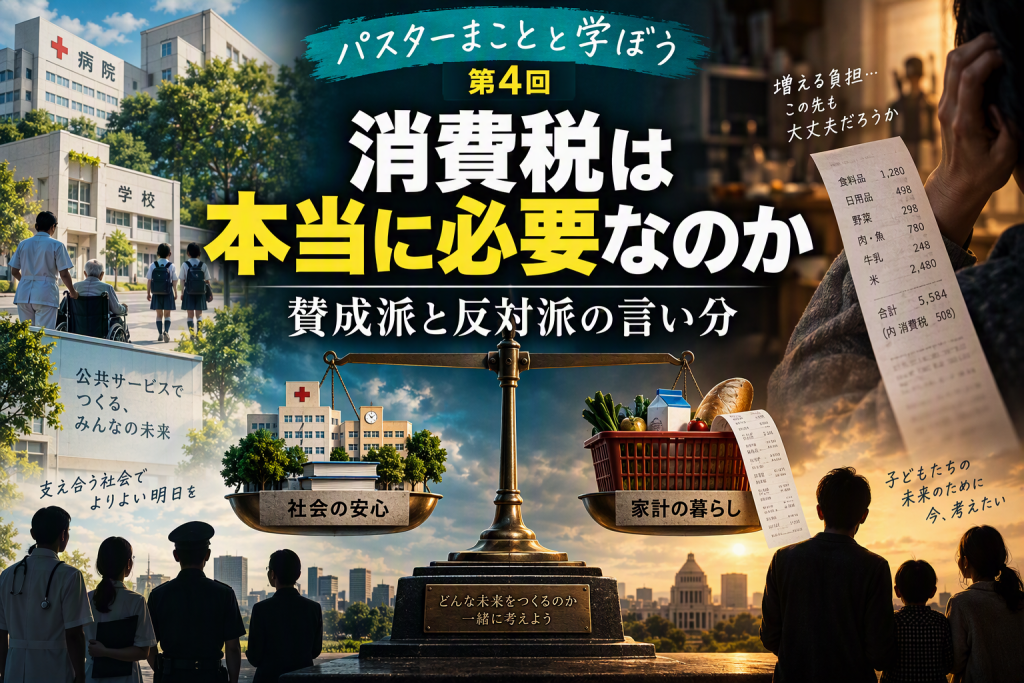
ニュースを見ると、「消費税を下げるべきだ!」という人もいれば、「いや、維持すべきだ!」という人もいます。なぜ、こんなに意見が分かれるのでしょうか。
まず、消費税を必要だと考える人たちです。彼らはこう言います。「日本は高齢化が進んでいる。医療や介護には多くのお金が必要だ」「消費税は安定した財源になる」。確かに、病院も介護施設も、突然お金がなくなったら困ります。
一方、減税や廃止を求める人たちは、こう主張します。「消費税は買い物のたびにかかる」「所得が少ない人ほど苦しい」「消費を冷やすことがある」。これにも説得力があります。
対立の奥にある優先順位
面白いことに、どちらも国民の生活を良くしたいと考えています。ただし、何を優先するか、どんな方法を選ぶかが違うのです。
政治の議論で大切なのは、「誰が良い人か、悪い人か」ではなく、「何を優先しているのか」を見ることです。財源の安定を重く見るのか、それとも目の前の家計負担を軽くすることを重く見るのか、という違いです。
そして、消費税の最大の問題点の一つと言われるのが「逆進性」です。難しそうな言葉ですが、実は中学生でも理解できます。
議論を整理するには、三つの質問が役立ちます。第一に、必要な公共サービスにいくらかかるのか。第二に、その費用を消費税、所得税、法人税、保険料、国債のどれで負担するのか。第三に、負担が重い人をどう支えるのかです。「必要か不要か」だけでは、この三つへの答えが見えません。賛成意見にも反対意見にも、前提や条件があります。相手の結論だけでなく、どの問題を心配しているのかを確かめると、対立して見える意見の共通点も見つかります。
次回は、1000円の買い物を例に、その仕組みを解き明かしてみましょう。公平とは、みんなが同じ額を払うことなのでしょうか。 ©Dr. Makoto
The case for keeping the tax—and for reducing it
Supporters of consumption tax say that Japan needs stable revenue for healthcare, long-term care, pensions, childcare, and education. Opponents answer that the tax raises the cost of everyday purchases, hits low-income households hard, and may weaken consumption. Both sides may want better lives for citizens, but they worry about different risks.
Different priorities behind the disagreement
A useful discussion asks three questions. First, how much do necessary public services cost? Second, should the money come from consumption tax, income tax, corporate tax, insurance premiums, or government debt? Third, how should society protect people who carry the heaviest burden? “Keep it or abolish it” does not answer all three. We should examine the assumptions and conditions behind each proposal instead of deciding that one side is good and the other is bad. The next chapter studies regressivity—the idea that the same tax rate can weigh more heavily on people with lower incomes. ©Dr. Makoto