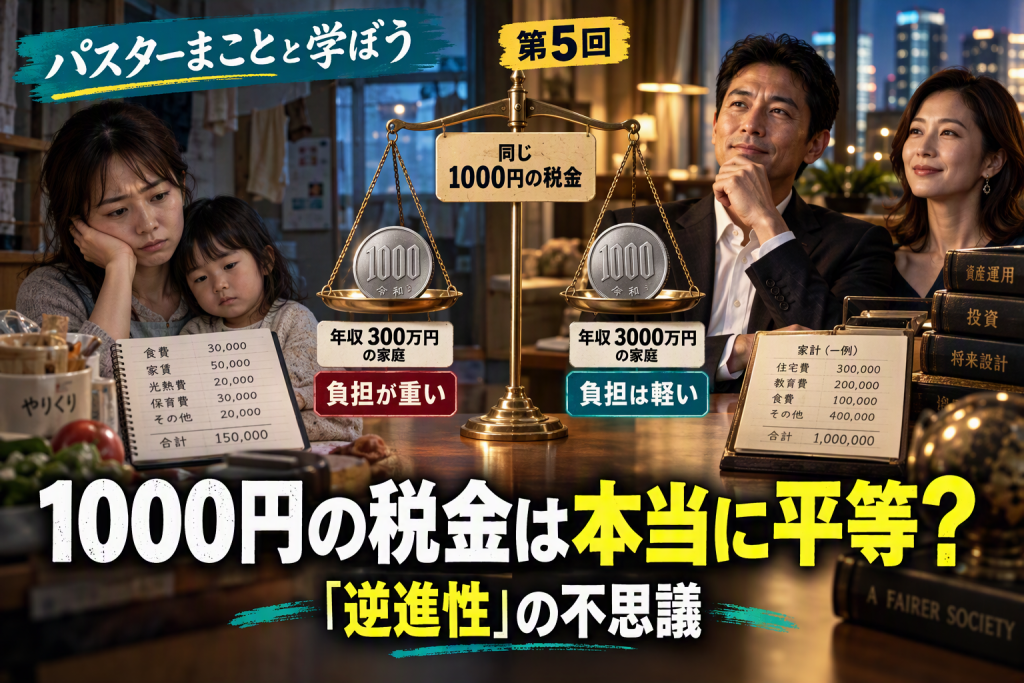
「逆進性」の不思議
Aさんの年収は300万円、Bさんの年収は3000万円です。では、2人が同じ商品を買ったとします。同じ価格の商品なら、消費税額も同じです。
一見すると公平です。同じ商品を買ったのだから、同じ税金を払う。ところが、別の見方もできます。Aさんにとっての1000円と、Bさんにとっての1000円では、家計に与える重さが違うかもしれません。
つまり、同じ税率でも、所得が少ない人ほど、収入に占める消費税負担の割合が大きくなりやすいのです。この性質を「逆進性」と呼びます。
公平をどう考えるか
ここで考えてほしいことがあります。公平とは何でしょうか。みんなが同じ税率を負担することですか。それとも、負担する力に応じて払うことですか。
実は、税の公平さには複数の考え方があります。サービスを利用する人が負担するという考え方もあれば、所得や資産の多い人が多く負担するという考え方もあります。
そのため、消費税の負担をやわらげる方法として、食料品などに低い税率を適用する仕組みや、所得の少ない世帯への給付が議論されています。ただし、制度が複雑になったり、支援が本当に必要な人へ届くのかという新たな問題が生まれたりもします。
具体的には、収入の多くを食費や光熱費に使う家庭ほど、消費に回る割合が大きくなります。貯蓄に回せる余裕が少ないため、収入全体に対する消費税の割合も高くなりやすいのです。そこで軽減税率や給付が考えられますが、どの商品を軽減するか、誰にいくら給付するかで新たな線引きが生まれます。公平さには、「同じ扱いをする公平」と「事情の違いに応じて扱いを変える公平」があり、税制はその二つの間でバランスを取ろうとしています。
税金は数字の問題に見えて、実は価値観の問題でもあるのです。 ©Dr. Makoto
The same amount can feel very different
Suppose one person earns 3 million yen a year and another earns 30 million yen. If they buy the same product, they pay the same consumption tax. Yet 1,000 yen may take a much larger share of the first person’s available income. This is called regressivity: lower-income households tend to spend a larger share of their income, so consumption tax can take a larger percentage of what they earn.
Two meanings of fairness
Fairness can mean treating everyone the same, or it can mean adjusting burdens to people’s ability to pay. Reduced rates on food and cash benefits for low-income households can soften regressivity, but they also create new questions: which goods should receive a lower rate, who qualifies for support, and how complex will the system become? Tax policy must balance equal treatment with attention to different circumstances. The next chapter compares consumption taxes in other countries and shows why the headline rate alone does not tell the whole story. ©Dr. Makoto